David Chilton has returned with a sequel to his best selling personal finance novel the Wealthy Barber. The original Wealthy Barber was one of the first of its kind, telling the story of how a barber (seemingly low-income earner) ends up being financially secure by following a down to earth financial plan. The barber teaches his clients about how he ended up being in a strong financial position through diligent saving and living within ones means.
In David Chilton's sequel he no longer uses the fictional characters in his original book, but uses a more casual approach discussing personal finance, as if he were chatting to you in your living room. The good news is you can just close the book when you don't want to hear from him anymore, since it would be awkward to try to kick him out.
Unfortunately, there isn't a lot of new information in this sequel. He still preaches a lot of the maxims you'll see in other personal finance books (i.e. The Automatic Millionare by Bach) such as: pay yourself first, live within your means, credit is a dangerous thing when not used properly, don't try to keep up with the jones' and always save for a rainy day/retirement. There are a couple tidbits of wisdom and it is a very quick read with very short paragraphs and chapters.
One insightful thing Chilton mentions is how income is sometimes confused with wealth. Having a high income is great but if you also live lavishly it can be difficult to save. Plus the income won't be there indefinitely especially if you plan to retire (we can't all work forever) or if you lose your job. Wealth on the other hand is something that you build over time by diligently saving and making good investments decisions. The idea of wealth is having your money work for you, the idea of income is working for money. There's a big difference and it's important not to get the two confused. I would highly recommend reading the original Wealthy Barber but would suggest passing on the the sequel.
This may be some radical advice, but I truly believe that your investments (retirement fund, child's education fund, new home account) are best left to the person who cares about them the most. That's you! When we let others handle our investments (i.e. Manulife, Sunlife, Investors Group, etc...) we believe that they know better. How could they not, with all their sophisticated certificates and fancy business cards. Well it is statistical fact that investment advisers on average have underperformed the market indices (Malkiel B., 1973). So why do we constantly fork over our hard earned dollars to somebody in a suit who has convinced us that they know better?
One main reason that we continue to seek out investment adviser services is that we are led to believe that we cannot handle the responsibility ourselves. There is a multi-billion dollar industry built on this mentality. The more complicated they make the investment world seem, the more likely it is we will have to seek their services. A great book written by Robert Kiyosaki, author of the Rich Dad series, entitled Conspiracy of the Rich talks about how we are deliberately led to believe that we cannot handle our own investments so that the banking industry and other financial institutes can continue to reap large profits. For more information check out: conspiracy-of-rich.html.
When you are looking at investment vehicles be sure to ask about the Management Expense Ratio or MER. The MER is a % annual fee of the capital you invest that goes into the investment adviser's pocket. MER's typically range from 0.5% to 2%. Paying this fee does not garuntee positive growth of your investments. In fact, even if the markets take a tumble and your investments take a loss the investment adviser still gets paid. Although 2% may not seem like a lot of money over the long haul it adds up to big bucks and companies that offer portfolio management services know this.
My suggestion is to seek out the lowest MER's or even better learn how to handle your investments yourself. Low MER's can be found in the form of Index Funds and Exchange Traded Funds (ETF). For more information on ETF's traded in Canada visit Claymore investments (http://www.claymoreinvestments.ca/) and iShare (http://www.ishares.com/). These types of investments offer some of the lowest MER's. Over the long term low MER's and funds that mirror the market index will outperform 70% of all actively traded funds (Bogle J., 2007).
Even better is to manage your investments yourself. After all nobody cares more than you do. Another plus is that although you may have a couple losses in your investment career you can use those losses to build on your investment knowledge and develop your own investment style. If you pay someone else to do it, they can lose your whole nest egg and what you're left with is an empty pocket and no new investment knowledge to help you get out of the hole. The only thing you may gain from that experience is not to trust investment advisers.
Investing is risky business. As you increase your investment knowledge and gain valuable experience the risk levels will decrease. One key to unlimited wealth and prosperity is literacy and a local library card (free-books-magazines-dvds-and-music-cds.html). There have been a plethora of literature about how to build and keep your wealth. That being said, it's important to focus on the best books, because a lot of rubbish has been published on the subject. I've included a short of good reads I've come across at the end of this article
Knowledge is the new wealth. You can only attain this knowledge through actively managing your own investments, not by paying someone else to do it. Vultures are waiting around every corner to put their hands in your pocket. You can handle your own investments and you can develop your own investment style. Why pay others to gain valuable investment experience and play roulette with your nest egg?
Here is a short clip about ETF's:
Great Personal Finance and Investing Books Worth Reading
Bogle J.C. 2007. The Little Book of Common Sense Investing: The Only Way to Guarantee Your Fair Share of Stock Market Returns. John Wiley & Sons, Inc., Hoboken, New Jersey.
Malkiel B.G. 1973. Random Walk Down Wall Street: The Time-Tested Strategy for Successful Investing. W.W. Norton & Company, Inc., New York, N.Y.
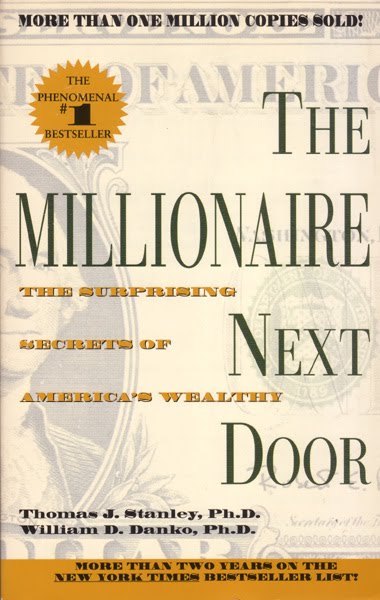
This is one of the best personal finance reads out there. I would highly recommend this read for anyone who wants to learn more about how to become wealthy and the misconceptions that we have about the wealthy. In Thomas Stanley & William Danko's "The Millionaire Next Door" they probe into the lives of 500 affluent people to discover some amazing facts and similarities the wealthy share.
We often associate the wealthy with expensive Lamborghini's, yachts, and mansions. In most cases the most affluent can be your next door neighbour who drives a Toyota. There is an old saying "all hat, no cattle." This is one of the main messages of the book. People who usually give the appearance of ultra wealth are often just fakes. Their expensive tastes and habits are financed by loans and credit cards, so these type of people are usually deep into debt. People who end up building wealth are the ones who are smart consumers and well educated in the realm of personal finance. They are often business owners and have started with next to nothing.
One of the questions this book addresses is why some people who have won the lottery become bankrupt in a short amount of time afterwards. You would think that someone who won the lottery would never have to work again, but history has shown that most lottery winners end up in the same place they were before they won the lottery. Someone who was not used to having such money stumbles upon a fortune instantly. Their spending habits haven't changed nor has there financial literacy/IQ. In that case the money is lost as quickly as it was granted. This emphasizes the importance of how the wealth was generated and the development of your own financial knowledge.
The thing about people who have built their wealth from scratch is that they have very high financial IQ's. They have learned how money works and are able to use that knowledge to the fullest. There are cases of wealthy people with high financial IQ's that were close to losing everything, but were able to rebuild their wealth quickly because of their financial knowledge. Donald Trump is a great example of someone who has an exceptionally high financial IQ. There was once a time when he was millions of dollars in debt but rebounded to becoming one of the wealthiest men in America because of his financial knowledge. This book tells the story of the most affluent people in America and sheds light on the misconceptions we have about the wealthy. We can learn a lot about how this minority operates and hopefully gain some incite into our own financial lives. This book is a definite two thumbs up, borrow it from the library today!